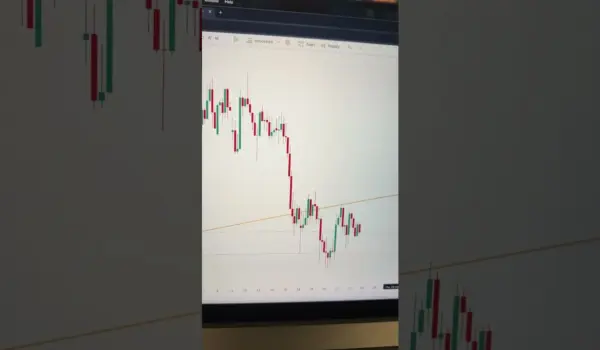
$300 Gold Crash Confirmed – March 5, 2026

Gold’s recent $300 decline marks a meaningful shift in short-term momentum and has put the precious metals market under closer scrutiny. A move of this size is large enough to matter for traders, portfolio managers, and anyone watching the broader risk tone, especially when it comes after a period of strong interest in gold as a defensive asset. The key question now is whether this is the start of a deeper structural reversal or a corrective pullback within a larger uptrend.
From a market structure perspective, the focus is on how price behaves around nearby supply and demand zones. If sellers continue to defend overhead supply and buyers fail to reclaim lost ground, the decline can extend as liquidity is drawn lower and weaker hands are forced out. If, however, the market stabilizes and begins to absorb selling pressure, the move may prove to be a retracement rather than a full trend change. In that case, gold could remain in a broader bullish structure while still undergoing a healthy correction.
Liquidity sweeps are especially important in this environment. Sharp moves in gold often occur when price runs through obvious highs or lows, triggers stops, and then either reverses or accelerates. That makes it essential to separate temporary volatility from genuine directional change. A single strong selloff does not automatically confirm a long-term top, but it does raise the probability that the market is transitioning into a more cautious phase.
The macro backdrop also matters. Gold is sensitive to shifts in risk sentiment, real yields, central bank expectations, and demand for safe-haven assets. When those forces turn less supportive, momentum can fade quickly. If the broader macro environment continues to favor the dollar or reduces the appeal of defensive positioning, gold may struggle to recover in the near term. If uncertainty rises again, the metal can quickly regain its bid.
For traders, the main priority is discipline. In a market like this, capital protection matters more than trying to catch every swing. Clear invalidation points, position sizing, and patience are critical because sharp reversals can happen just as quickly as sharp breakdowns. The best setups will usually come after the market reveals whether it is accepting lower prices or rejecting them.
At this stage, the decline should be treated as a warning sign, not a final verdict. Gold may be entering a deeper corrective phase, or it may simply be resetting before another attempt higher. The next few price reactions around key zones will be more informative than the initial drop itself, and they will help determine whether the market is building a new bearish structure or preparing for continuation within the larger trend.