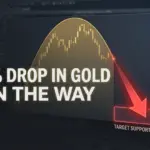
Will Gold Drop Further? But First… | Gold Daily Analysis March 23, 2026
Gold remains at a potentially important decision point, with the current outlook centered on a simple but critical question: is the market preparing for a deeper correction, or could it produce one more push higher before broader weakness takes hold?
The analysis framework here is based on market structure, liquidity zones, and recent price behavior. That combination suggests a market that may not yet be in a fully resolved trend phase. Instead, gold appears to be trading in an area where both continuation and short-term retracement remain plausible, making confirmation especially important before drawing strong directional conclusions.
A key theme is the interaction between supply and demand areas. In practical terms, that means traders are watching where selling pressure has previously emerged and where buying interest may still be active. If gold begins to lose momentum around supply, that would support the case for a deeper correction. On the other hand, if demand continues to hold and price can reclaim short-term strength, the market could still attempt one more move higher before any larger downside phase develops.
Momentum shifts are another central part of the outlook. When a market is transitioning from strength to correction, momentum often weakens before price fully breaks down. That makes momentum behavior especially useful in judging whether recent movement is only a pause in a broader trend or the early stage of a more meaningful reversal. In this context, traders would likely be looking for signs that bullish pressure is fading, or alternatively, that sellers are failing to follow through.
Institutional positioning is also highlighted as a factor that could influence the next directional move. While no specific positioning data is provided, the implication is that larger market participants may be active around important liquidity zones. This matters because institutional flows often help determine whether price cleanly breaks through a level or instead reverses sharply after sweeping liquidity.
The broader takeaway is that both bullish and bearish scenarios remain valid until the market provides stronger confirmation. A bearish outcome would likely require evidence that key support or demand areas are no longer holding, opening the door to further downside. A bullish near-term outcome would likely depend on temporary strength emerging from demand, potentially allowing gold to extend higher before sellers regain control.
Risk management stands out as especially important in the current environment. Increased volatility and macroeconomic uncertainty are both noted as active influences, particularly through their effect on safe-haven flows. That means gold may be more reactive than usual to changing sentiment, and traders should be cautious about assuming clean directional follow-through without confirmation.
For market participants, the most useful approach may be patience rather than prediction. In a mixed technical environment, waiting for price to confirm either downside continuation or short-term renewed strength can be more effective than anticipating the move too early. Gold appears to be near a point where structure, liquidity, and momentum should soon offer clearer signals. Until then, flexibility and disciplined risk control remain essential.